
2026 B2B Sourcing Guide: How to Choose High-Performance Heater & Fan Manufacturers for Global Markets
2026 B2B Sourcing Guide: How to Choose High-Performance Heater & Fan Manufacturers for Global Markets
As global regulatory frameworks tighten and consumer demand shifts toward energy-efficient climate control, sourcing high-performance electric heaters and cooling fans requires rigorous technical and supplier evaluation. This comprehensive 2026 B2B guide outlines key engineering metrics, compliance standards, and supply chain strategies for importers, wholesalers, and brand owners.
1. The Evolving B2B Market for Heaters & Fans: Key Industry Drivers
The global market for portable heating and ventilation hardware is undergoing a structural transition. Driven by stringent European ErP (Energy-related Products) directives and volatile energy costs, commercial procurement is no longer strictly dictated by FOB unit prices. Modern distributors prioritize long-term thermal efficiency, low failure rates, and multi-market certification readiness.
For OEM and ODM buyers, navigating seasonal demand curves requires manufacturing partners with flexible capacity and agile production lines capable of switching between summer cooling fans and winter PTC or convection heaters without operational bottlenecks.

2. Essential Technical Specifications Every B2B Buyer Must Evaluate
Technical evaluation forms the core of industrial sourcing. Evaluating supplier engineering datasheets against real-world performance requires verifying several critical parameters:
- Motor Configurations: Shaded-pole vs. Permanent Split Capacitor (PSC) vs. Brushless Direct Current (BLDC/DC) motors.
- Power Output Ranges: Wattage spectrums spanning 30W for desk circulation fans up to 2000W+ for high-output ceramic convection heaters.
- Acoustic Performance: Sound pressure levels maintained at or below 25 dB(A) for ultra-quiet residential modes, scaling up to 55 dB(A) at maximum airflow velocity.
- Air Delivery Dynamics: Volumetric airflow rates measured in CFM (Cubic Feet per Minute) or $m^3/h$, along with CADR (Clean Air Delivery Rate) integration where filtration is applicable.
For a detailed breakdown of industrial airflow standards, consult the B2B Airflow & Acoustic Testing Methodology Guide.
3. Energy Efficiency and DC Motor Innovation: Lowering Operating Costs
The shift from traditional AC motors to advanced DC/BLDC motors represents the single largest technical leap in HVAC hardware. DC-powered cooling fans and ceramic heaters consume up to 60% less energy than conventional AC equivalents while offering granular, multi-stage speed control.

By reducing power consumption without sacrificing air velocity, DC motor appliances enable brand owners to position their portfolios premium-grade, eco-compliant solutions that meet strict regional energy ratings.
4. Safety Features and Multi-Scenario Applications (Indoor, Bathroom, Outdoor)
Product safety and versatility dictate retail success and warranty claims. High-performance heating appliances must incorporate multiple redundant safety mechanisms, including mechanical tip-over switches, internal thermal cut-offs (thermostats), and flame-retardant V-0 grade ABS plastic housings.
For specialized deployment scenarios such as bathroom or outdoor patio heating, ingress protection ratings are critical:
Review our IP24 Ingress Protection Compliance Manual to verify enclosure sealing standards for humid environments.
| Application Environment | Required Safety Rating | Key Mechanical Features |
|---|---|---|
| Living Room / Bedroom | Basic IP20 / Class II Insulation | Low-noise DC motor, auto-dimming LED, tip-over protection |
| Bathroom / Wet Zones | IP24 Splash-Proof Rating | Sealed PCB, isolated wiring, splash-resistant switches |
| Covered Outdoor / Patio | IP55+ Dust & Water Resistance | Corrosion-resistant aluminum casing, infrared carbon tubes |
5. Navigating Global Compliance: CE, CB, GS, RoHS, and BSCI Standards
Customs clearance and market access rely entirely on fully verified international testing certificates. Importers must ensure that factory audit documentation matches the specific product configurations shipped.

Essential regulatory frameworks include:
- CE / LVD / EMC: European Low Voltage and Electromagnetic Compatibility directives.
- CB Scheme: International IEC safety test reports enabling fast-track local registration across 50+ member countries.
- GS (Geprüfte Sicherheit): German safety certification highly prized in European retail.
- RoHS / REACH: Hazardous substance restriction compliance for materials and internal components.
- BSCI / ISO 9001: Social compliance and quality management system audits ensuring ethical manufacturing practices.
To request verified test reports and factory audit files, visit our Compliance & Quality Certification Portal.
6. OEM vs. ODM Capability: Customization, Tooling, and Prototyping
Choosing between Original Equipment Manufacturing (OEM) and Original Design Manufacturing (ODM) depends on your time-to-market strategy and capital investment budget:
- OEM (Private Labeling): Ideal for fast market entry using pre-existing, certified factory molds with customized branding, color schemes, and packaging.
- ODM (Custom Tooling): Necessary for proprietary designs, unique industrial aesthetics, and patented air duct structures. Requires industrial design engineering, 3D prototyping, and dedicated plastic injection tooling.

Learn more about private label turnarounds in our OEM/ODM Customization Process Guide.
7. Supply Chain Resilience: Evaluating Factory Capacity and Lead Times
Seasonal appliances suffer from narrow sales windows. A delivery delay of three weeks can result in missed winter or summer retail cycles. When auditing potential manufacturing partners, verify physical infrastructure metrics rather than reliance on self-reported estimates:
- Plant Footprint: Facilities operating over 15,000+ $m^2$ provide adequate staging areas for raw materials and finished goods.
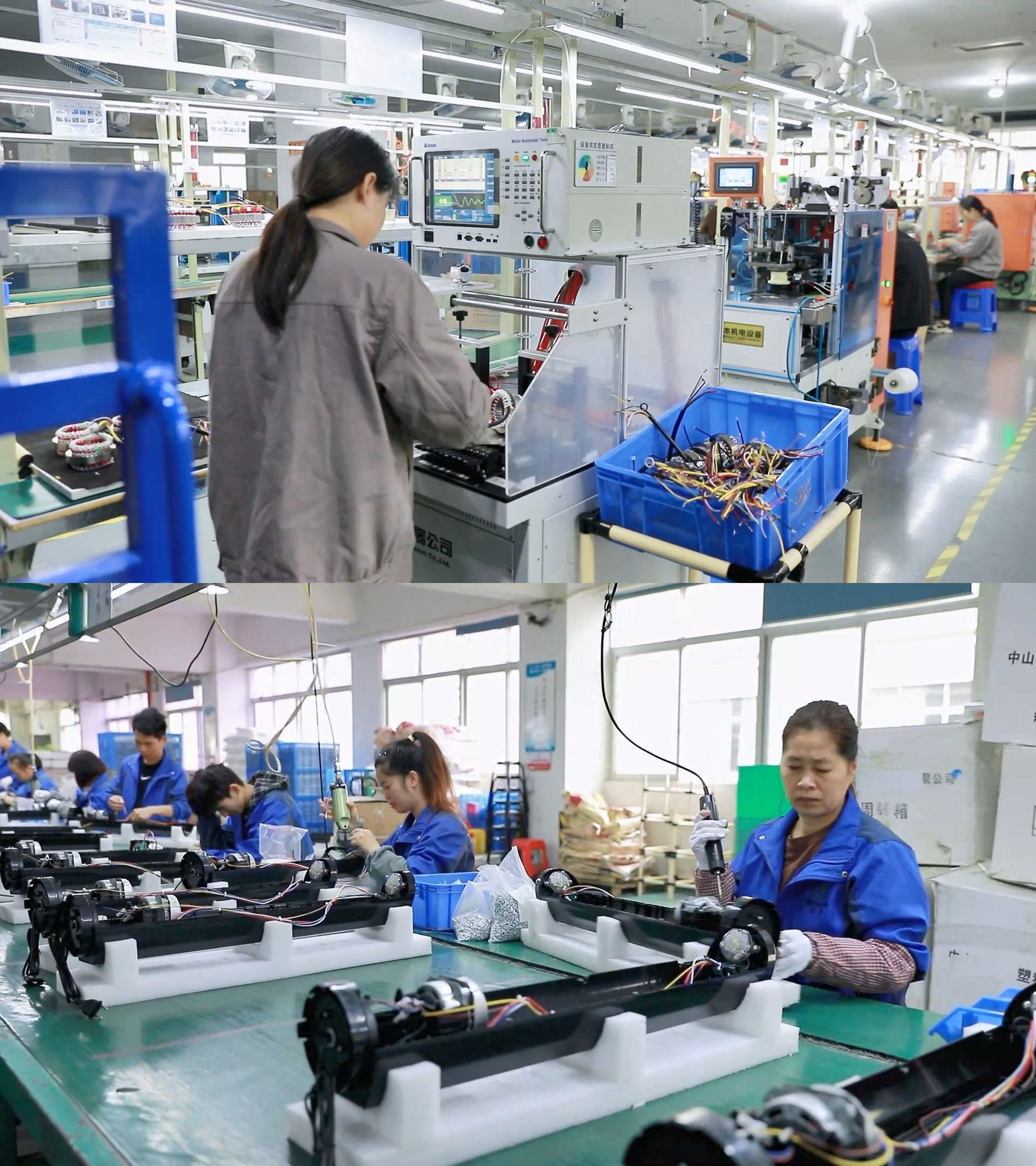
- Production Infrastructure: 10+ dedicated automated and semi-automated assembly lines to absorb peak-season surges.
- Lead Times: Standard production runs typically range between 30 to 45 days post-sample approval, with container loading optimizations for 20GP/40HQ shipping units.
8. Quality Control Protocols: From Raw Materials to FQC Inspections
A robust Quality Control (QC) infrastructure prevents high field failure rates and brand reputational damage. Leading manufacturing partners maintain strict multi-stage inspection regimes:

- IQC (Incoming Quality Control): Inspection of raw plastics, heating elements, DC motors, and PCB components prior to assembly.
- IPQC (In-Process Quality Control): Online functional testing, high-voltage insulation tests, and earth resistance checks at every assembly station.
- FQC / OQC (Final & Outgoing Quality Control): AQL 2.5/4.0 sampling standards, drop testing, acoustic chamber checks, and full-power burn-in testing.
9. How to Select the Right OEM Manufacturing Partner for Long-Term Growth
Selecting a long-term manufacturing partner requires balancing technical capability, certification integrity, and operational transparency. By establishing clear technical specs, auditing factory infrastructure, and verifying international compliance early in the sourcing phase, global buyers can secure resilient, high-margin supply chains for years to come.
Ready to streamline your appliance sourcing? Contact our B2B Sourcing Engineering Team today to request detailed product catalogs and factory audit schedules.
Request a 2026 OEM/ODM Product Catalog & Wholesale Quote
Looking for certified, high-performance electric heaters or DC fans tailored to your market? Contact our OEM specialists for complete engineering specs, MOQ details, and factory-direct pricing.